Cacio e pepe. Cacio e pepe (Italian pronunciation: [kaˈtʃo e ˈpeːpe]) is a pasta dish from modern Roman cuisine. "Cacio e pepe" means "cheese and pepper" in several central Italian dialects. Mix Pecorino and fresh ground pepper in a bowl, boil pasta in salted water, lift pasta into the bowl with cheese and. This is how to make real cacio e pepe , the classic Roman pasta dish.
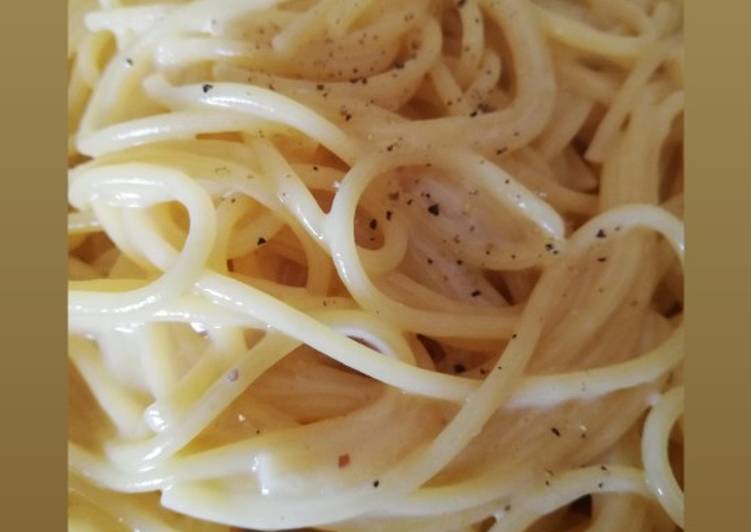 Cacio e pepe is the most divine pasta dish made with simple, high quality ingredients.
Tender noodles tossed in a two-cheese blend and a hint of cream ensure luscious forkfuls.
The name is cacio e pepe: cheese and pepper.
Cacio e pepe is the most divine pasta dish made with simple, high quality ingredients.
Tender noodles tossed in a two-cheese blend and a hint of cream ensure luscious forkfuls.
The name is cacio e pepe: cheese and pepper.
ingredienti per fare la Cacio e pepe :
- preparalo 350 gr spaghetti.
- preparalo 200 gr grana o parmigiano o pecorino.
- preparalo qb Pepe.
- preparalo Sale.
The addition of garlic changes the dish but it is still tasty. Cacio e Pepe is a simple Roman pasta dish that is easy to make and tastes absolutely heavenly. Don't let its simplicity fool you, this pasta is absolutely delicious! What does Cacio e Pepe mean?
fasi di cottura Cacio e pepe
- Mettere a bollire l'acqua per la pasta che dev'essere un po' meno del solito in quanto serve più amido per creare la mantecatura finale. Calare la pasta e nel frattempo tostare il pepe in padella, allungare con acqua di cottura della pasta..
- Togliere la pasta al dente e versare in padella, rigirare con la pinza gli spaghetti per non farli attaccare e nel frattempo preparare la cremina con il formaggio grattugiato. Metterlo in una ciotola e allungare con acqua di cottura, girare con una frusta energicamente per non creare grumi. Quando sarà diventato crema versare sulla pasta, sempre girando bene, se occorre aggiungere altra acqua di cottura, mettere altro pepe e servire subito.
This foolproof method delivers the classic, crave worthy flavors and textures of cacio e pepe—strong peppery backbone (without verging towards too. This cacio e pepe inspired pizza is so worth it—the dough is one of the best you'll ever make. Get the recipe at Food & Wine. Cacio e pepe (the name means simply cheese and pepper) seems elemental, what you might cook at home after a late night out because you need sustenance before heading to bed, or, like aglio e olio. The traditional pasta used for cacio e pepe is tonnarelli, sometimes sold as spaghetti alla chittara, a squared-off, slightly thicker spaghetti.